
Luis Bonilla-Molina[1]
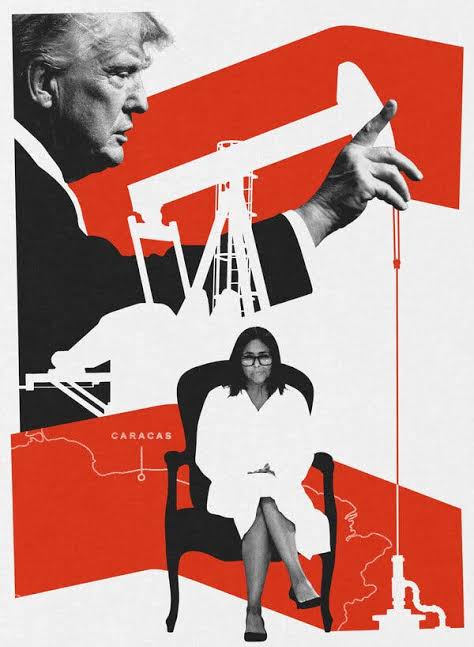
Venezuela is going through a historic tragedy. The World Cup managed to displace from the international mainstream media the colonial situation that the United States has imposed on Venezuela since January 3, while an important part of the continental and world left was grateful for this departure from the media spotlight, as it could no longer find arguments to justify the surrender of the country’s colonial administration to Trump’s plans. This Colonial Board of Directors is led by the Rodríguez brothers (Delcy, Jorge) and Diosdado Cabelllo.
May 1, 2026 will be remembered for the end of the illusion that the «new political moment» announced by the Delcy-Trump duo, would allow broad sectors of the working population to improve their wages and material living conditions.
The minimum wage remained anchored at less than $0.4 per month and the income bonus – without wage incidence – did not reach $200 per month, in addition to the fact that these bonuses do not reach all workers. While this was happening, the dollar soared again (currently above 745 bolivars), encouraging inflation in a country where each product in the basic basket can cost two or three times more than the regional average.
Venezuela, led by Marco Rubio, returned to the International Monetary Fund and the World Bank; although Delcinato tries to justify it as the only possibility of recovering the 5 billion dollars retained by the IMF and which correspond to Venezuela, the reality is that this implies a new structural adjustment of the economy. The most recent precedent of a package of economic and political measures against the working class, which had nothing to envy of neoliberal recipes, was applied by Maduro, between 2018 and 2025. But the worst thing is that the Rodríguez brothers and Diosdado Cabello are absolutely silent about maintaining sanctions and blocking Venezuela’s international accounts, which the United States has applied since the first government of what they now define as a partner, Donald Trump.
On May 13 of this year, the Venezuelan government announced the beginning of the restructuring of the Venezuelan debt in dialogue with the IMF, estimated at the time at 170 billion dollars, a figure that contrasts with the 82 billion dollars of income that the country will have in 2026, according to estimates by the multilateral organization itself. On May 26, Delcy Rodríguez announced the creation of the Presidential Commission for the Restructuring and Reengineering of the Government, to make it more effective, that is, a reform of the State in the style of IMF recommendations, focused on shrinking the State under the pretext of making public spending more efficient.
On June 24, hours before the telluric tragedy was unleashed, the Financial Times announced that the Venezuelan government had agreed on the value of the country’s foreign debt, estimated at around 240 billion (24 billion) dollars, a figure that competes with what caused the debt crisis in Greece, the most indebted country in the Eurozone. This figure explains the colonial administrative junta’s haste to restructure the government and suggests resignations, the closure of public institutions and the intensification of the «corralito» on the wages of the local working class.
In Venezuela, the work-wage ratio has reached what some experts on the subject consider to be a new slavery, or the disappearance of the real wage and its replacement by the concept of income (bonus), as part of the local economic structure, causing the loss of acquired rights, the precariousness of values for vacations, Christmas bonuses (thirteenth month) or the impossibility of having a pension that allows the purchase of at least one medicine in the country.
With a new Hydrocarbons Law, approved in an accelerated manner by the colonial parliament of the Rodríguez brothers and company, Venezuelan oil revenues per barrel were reduced from 10 to 1.7 dollars, something that makes us yearn for the sectoral law approved by social democracy in the forties of the twentieth century. in the short term, to a tragic deepening of the already known collapse of all public services. In just one decade (2014-2024), Venezuela has lost the most palpable elements of bourgeois institutional modernity, entering a phase of return to pre-modernity, to the point that the 2024 electoral offer focused on the possibility of guaranteeing drinking water, electricity, public transport, police security, weekly schedules in schools and universities that opened their doors for only two days.
Although it may seem incredible, the migratory diaspora, estimated at about six million Venezuelans, has managed to help solve the income crisis with its remittances, but there is no money that can maintain purchasing power in the face of the unbridled advance of inflation.
An important element, which can only be explained as part of the historic defeat of the Bolivarian revolution, is the sympathy that the capture, kidnapping and imprisonment in the United States of the Maduro-Flores presidential couple caused in the majority of the population. Unlike in 2002, when the population took to the streets and defeated the coup d’état against Hugo Chávez Frias, this time only diminished concentrations were observed managed by the increasingly reduced social base of madurismo, which under his leadership quickly transformed into the colonial Delcinato. The sympathies for the gringo military operation had to do with the material situation of the working class and the interpretative syllogism they made: «if the disappearance of wages and the precariousness of the material situation of life as an effect of US sanctions, have their origin in the rivalry between Maduro and Trump, if Maduro is no longer there, This will change for the better.» Ordinary people believed that sanctions would be lifted, that Venezuela could sell oil freely, and that income would improve its economic situation. But what has happened is the maintenance of this precariousness and even its aggravation, which is transforming sympathy into disillusionment and irritation with the gringos, although this has not yet become an anti-imperialist movement with mass influence.
The outlook is, to say the least, bleak.
Earthquakes
But when it was thought that things could not get worse, reality ended up proving otherwise. Two earthquakes, with a magnitude of 7.2 and 7.5 on the Richter scale, shook Caracas and the coast of La Guaira on June 24, a seismic event that experts describe as a «double». Dozens of buildings disappeared, others were uninhabitable or severely damaged, with La Guaira, located on the seafront, being the most affected area. Thousands of deaths and unestimated numbers of missing persons reveal the magnitude of the catastrophe.
As in a horror movie, the first few hours were not attended by the army and senior officials. Only local firefighters, civil defense and a growing number of citizens cared for the victims on their own. Along with the infrastructure collapsed by the earthquake, the discourse of the civic-military alliance as an engine of change in Venezuela has been buried.
But in politics there is no void that can be sustained, so a sea of hands and bodies in solidarity has built a human chain of help, bringing medicine, food, clothes, belongings and rustic tools from all corners of the country to help rescue trapped people. It took more than 36 hours for heavy rescue teams to arrive, while the international relief brigades, who were the driving force behind the technically skilled humanitarian work and witnesses to what was happening there, began to do so.
Almost the entire coast of La Guaira has been reduced to rubble, with urbanisms built by the private sector and the government falling equally. The complaints of those affected, who lived in apartments and social housing delivered by the national government, show images of structural manufacturing errors that require a public investigation to determine their certainty and future responsibilities.
In the face of the continuous abandonment of the government, which followed the hours and days of the tragedy, the response was forceful on the part of the simple people. Immediately after the tragedy – which contrasts with the government’s ineffectiveness – a wave of citizen solidarity was generated, which refused to deliver food and medicine to the government because it did not trust that it would reach the victims. The caravans, after caravans of volunteers and self-organized motorized people, formed a permanent bridge of aid. The belated official response was also clumsy, trying to stem this wave of solidarity, but the checkpoints, checkpoints, and police-military containment pickets were overcome, overtaken, and ignored by citizens. This situation of popular rebellion also expressed deep distrust in all institutional forms and even in political organizations, trusting only in what they did and delivered directly, from their hands to those affected. The slogan «only the people, save the people» began to be repeated by citizens of different ideological inclinations.
Very few politicians dared to be directly at the site of the disaster, perhaps discouraged by the rejection captured on social media cameras, which generated the visit of Jorge Arreaza (former foreign minister and member of the PSUV leadership) and Nicolás Maduro Guerra (Maduro’s son), who were booed and reprimanded by citizens for the ineffectiveness of the government and the problems of affordable housing that gave way in the face of the earthquakes.
In the end, the government established shelters for those affected, located in different parts of Caracas, with the promise of relocating them to homes in the coming months. But still, hundreds of relatives search alone for their loved ones trapped in the rubble, basically with the help of volunteers, neighbors and social movements. Colonization not only violates territorial and democratic sovereignty, but also dilutes the remnants of a revolutionary process that promised to break with neoliberal logic and put institutionality at the service of the people.
Chronology of colonization
The bourgeoisie is the enemy of socialism, regardless of the ideological discourse it assumes to accumulate wealth. For this reason, as the new Bolivarian bourgeoisie (2002-2017) consolidates, under the leadership of Maduro, it seeks to recover the relationship with the United States and reconcile with the old bourgeoisie that existed before the Bolivarian process, with whom ties had been broken since the coup d’état of 2002. Between 2018 and 2023, Maduro was the architect of this double meeting, and its political operators were Delcy Rodríguez (dialogue and reconciliation with the employers’ association FEDECAMARAS) and Jorge Rodríguez (negotiations with the opposition with an agenda permanently guided by the US that highlighted the limitations of María Corina Machado’s sector). Diosdado Cabello acted – and continues to act – as a guarantee of internal control, intervention of political instruments and repression of working class organizations).
It was there that the colonization process began, in the capitulation of Maduro, in the historic defeat of the contradictory movement called the Bolivarian revolution. Maduro has paved the way for what appears to be a betrayal to facilitate open colonization starting on January 3. Even the post-colonialists, such as Ramón Grosfoguel and his colleagues, who united in the defense of Madurismo, today have openly broken with the colonial leadership (Delcy-Jorge Rodríguez and Diosdado) due to the rude and repugnant surrender that is being made of the country to the gringos and Zionism. January 3 and subsequent events are the result of the betrayal of the Bolivarian revolution initiated by Maduro.
The cascading events that shaped the colonial situation are:
January: Intervention, Capture and Initial Control of Assets
- January 2, 2026. Military announcement: President Donald Trump publicly announces that the U.S. Armed Forces will conduct operations on Venezuelan territory.
- January 3, 2026. Military operation and incursion: U.S. troops execute a military detachment in Caracas. U.S. military attack on Venezuela, with total ineffectiveness of the armed forces, police and local political leadership. Capture, kidnapping, and imprisonment of Maduro and Cilia Flores in the United States. Trump announces that the U.S. will temporarily lead Venezuela, specifying that he has made a deal with the line of succession in command in Caracas, which promised him «that they will not make the same mistakes as Maduro.» The original legitimacy of the Venezuelan government begins to reside in the gringo military boot.
- January 3 (in the afternoon); Guardianship announcement: The White House announces that the U.S. will directly «manage» Venezuela’s affairs and the management of its natural resources while the transition is established with the interim administration led by Delcy Rodríguez.
- January 4. Consolidation of the new colonial scheme. Joint meetings of the State Department, the National Security Council, and the War Department
- January 5. Inauguration of interim President Delcy Rodríguez through an extra-constitutional rule. Their position exceeds constitutional limits due to absolute absence (30 days) or temporary absence (maximum of 6 months). The legal framework on the form and timing of the presidency in Venezuela is now determined by the White House, the State Department, the Secretaries of War and Energy, and the U.S. Central Intelligence. Maduro and Cilia Flores appear in New York court
- Delcy Rodríguez publicly abandons anti-imperialism and replaces it with the so-called «Diplomacy of Peace».
- The United States confirms that it will have an extraordinary policy for the protection of Venezuela’s assets, in accordance with the interests of the aggressor power.
- January 6, 2026. Interim Governance Plan: Sectors of the State Department and the CIA establish strategic coordination with sectors of local government (Three-Phase Plan) under Washington’s supervision. The meetings begin with U.S. business sectors that may be linked to Venezuelan oil exploration in the new condition.
- January 7. The United States begins negotiations for the reopening of its Embassy in Caracas.
- January 9, 2026. Asset Control Executive Order: Trump signs the Executive Order titled «Safeguarding Venezuelan Oil Revenue for the Good of the American and Venezuelan Peoples.» The Trump administration creates the value of Foreign Government Deposit Funds in the U.S. Treasury Department, channeling all proceeds from the sale of Venezuelan oil and natural resources to protect them from creditors and intervene in their distribution. It is reported that the United States will keep a percentage of oil sales to compensate for the alleged damage caused by Venezuela.
- White House Oil Summit: Trump meets with executives from 17 major energy companies (Chevron, ExxonMobil, ConocoPhillips, Valero, among others) to coordinate investments of more than $100 billion under federal protection and U.S. control over oil sales.
- First Diplomatic Visit: A U.S. Department of State technical and security delegation arrives in Caracas to begin the evaluation before the U.S. Embassy reopens.
- January 15. Visit by CIA Director John Ratcliffe, who is received and accompanied by General González López, who weeks later would replace Padrino López at the head of the Venezuelan Ministry of Defense.
- January 28, 2026. Budget Control Mechanism: Secretary of State Marco Rubio appears before the U.S. Senate and details that the interim administration of Delcy Rodríguez must submit its monthly budget for approval by Washington. The implementation of a naval blockade/quarantine to control the international trade of Venezuelan crude oil directly by the U.S. is confirmed.
- January 29. The Hydrocarbons Law, which had been approved at first reading on January 22 and at second reading on January 29, is published in the Extraordinary Official Gazette.
- January 31. Arrival of Laura Dogu, the first U.S. chargé d’affaires in Caracas since the events of January 3. She would be replaced in April by John Barrett, currently in office.
February: Energy Restructuring and Cabinet Visits
- February 10 . The United States issues a general license that again authorizes oil and gas exploration and production activities in Venezuela.
- February 11 and 12, 2026. High-Level Visit: U.S. Secretary of Energy Chris Wright makes an official visit to Venezuela, meeting at the Miraflores Palace with Delcy Rodríguez. It inspects Chevron-operated oilfields and facilities in the country. (Executives from Chevron and Repsol were present.) On February 12, a visit to the Orinoco Oil Belt took place.
- The Reform of the Legal Framework for Petroleum is announced: Coinciding with the visit, Venezuelan legislation on hydrocarbons is reformed, eliminating PDVSA’s state monopoly, ceding operational control and commercialization to the private sector and to U.S. and international investors. Taxes were abolished, the royalties that Venezuela would receive were reduced, and conditions of oil exploration were created practically similar to those of mining during the Spanish colony.
- February 14 . U.S. teams conduct assessments at oil ports, export logistics and marine terminals.
- February 18. Visit by General Francis Denovan (Southern Command) and Undersecretary Josph Humire, who are received by the interim president and the «Venezuelan military high command.» The items on the agenda were drug trafficking, terrorism, regional security, migration, military cooperation, and implementation of the so-called «three-phase plan.» On February 19, the Venezuelan government announced the signing of agreements on these issues.
- From February 20 to 23. Technical teams began implementing the agreements reached on February 18 and 19 in the areas of police cooperation, intelligence exchange, border security, and migration coordination.
March: Diplomatic Reestablishment and Institutional Normalization
- March 4. Visit of Secretary of the Interior Doug Burgum
- March 13 to 19 . Publication of general licenses 49A, 52 and 5V. License 52 is considered one of the most important documents issued on Venezuela in 2026, by which it authorizes financial and commercial transactions that were previously prohibited with PDVSA and with any company that holds a stake of 50% or more.
- March 19, 2026: U.S. Embassy Reopening: U.S. Embassy in Caracas Operations (Venezuelan Affairs Unit) Formally Resumed. The Department of State relaxes travel advisories (the Travel Advisory moves to Level 3) for authorized personnel and contractors.
- The United States has transferred $100 million in gold from Venezuela to this country.
May:
- May 23 . The United States, with the authorization of the Colonial Administration Board led by Delcy Rodríguez, allowed an American military exercise to evacuate its embassy, which in reality was a demonstration of power and intimidation of the community. This exercise with planes, helicopters, and troops in the city of Caracas was conducted by U.S. Southern Command, the U.S. Marine Corps, and local emergency agencies under their command.
June: Military Oversight and Strategic Assessment
- June 3, 2026. High-Level Visit – Chairman of the Joint Chiefs of Staff: Gen. Dan Caine, the top military official in the U.S. Armed Forces, who is traveling to Caracas on an official visit, is holding meetings with military commanders and members of the interim government to review regional plans for stability, security of critical infrastructure, and the progress of the three-phase plan provided by the White House. Visit the reopening of the U.S. Embassy in Caracas.
- June 11 . U.S. troops, using drones and missiles, carry out a punctual kinetic attack inside Venezuelan territory, led by the Southern Command, in which a house is destroyed and the extrajudicial execution of Héctor Guerrero, accused of being the leader of the so-called Aragua Train, takes place. This operation was carried out with the knowledge of the Colonial Administration Council.
- June 25, 2026. Marco Rubio, after the earthquakes, maintains direct follow-up contacts with the administration in Caracas to coordinate emergency assistance and the continuous monitoring of bilateral relations.
July: Consolidation of the Management and Policy Balance
- July 23, 2026 Energy Protection Designation and Declaration: In a public act, Donald Trump explicitly reaffirms that Secretary of Energy Chris Wright leads the direct execution of energy and economic policy on Venezuela.
- Trump emphasizes that the U.S. exercises the right over the country’s economic management and oil revenues after the intervention.
- July 24, 2026. Donald Trump declares that «Venezuela is not ready for elections and says that Delcy Rodríguez is doing a fantastic job.»
U.S.-Israel bases
The earthquakes that shook Venezuela turned out to be the ideal pretext for the United States to decide to deploy elite forces, troops, and more than 3,000 military personnel in the country under the pretext of «conducting» post-earthquake economic and material reconstruction. In fact, these are new ways of presenting the establishment of military bases in the country, within the framework of the National Security Strategy announced by Trump in November 2025. This is complemented by the approaches and strategies agreed upon at the meeting of U.S. Southern Command, the Secretary of War, the State Department, and the region’s defense ministers at the so-called «Shield of the Americas» Summit in March of this year. To top it off, on July 20, 2026, Marco Rubio presented the document entitled «Cuba: the capital of communism of the twenty-first century», which together renews the worst environments of McCarthyism.
As always, the strategy of the gringos goes hand in hand with Israeli initiatives, so also in the days following the earthquakes, the Colonial Administration Board chaired by Delcy Rodríguez signed military, technical and financial cooperation agreements with members of the Zionist general staff. Present at the signing of the agreements was the Uruguayan-Israeli Roni Kaplan, with the rank of captain, spokesman for the defense forces of that country for the international Spanish- and Asian-language press, since June 2012, who lives in Jerusalem.
This U.S.-Israeli presence seems to anticipate the intention to extend over time the colonial situation that Venezuela has been experiencing since January 3.
The world has been turned upside down
In Venezuela, anything can happen, and Gabriel García Márquez’s magical realism plays its part. After January 3, it seems that the whole political reality entered another dimension. María Corina Machado, promoter of the U.S. invasion of Venezuela, was ruled out by Trump as a presidential replacement in the short term and now remains «stationed» in Panama, announcing that she can return to the country at any time, while the U.S. president warns her that he does not have her authorization.
At this point, no one seems to remember the so-called «Cartel de los Soles,» an excuse used by the Trump administration to carry out the January 3 military operation against Venezuelan sovereignty. The drug trafficking charges fell not only on Maduro and Cilia Flores, but also on other figures who now remain in power with the authorization of the gringos. Another of those accused of belonging to this «cartel» – and to whom the United States offers a reward of twenty-five million dollars – meets in Caracas all the time with the director of the CIA, the chargé d’affaires or the head of the Southern Command. And as if the unusual had no bounds in Venezuelan political folklore, Diosdado Cabello is now a defender of the occupant of the White House, attacking influencers who question Trump. The formal arguments and expected limits of the policy are diluted, given the weight of the colonial oil economy.
On the other hand, the once anti-imperialist radical in the Mercosur scenario, Delcy Rodríguez, now interim president, invites Israelis to contribute to the economic reconstruction of Venezuela. The Israelis, experts in demolitions, are now called upon to rebuild the country’s infrastructure and economy, for which a delegation of high-ranking military officers has settled in Caracas and in the south of the country, where the gold deposits are located.
When the political surrealism seemed to be coming to an end, the eternal defense minister of the Maduro government, Vladimir Padrino López, declared that he was aware of the military operation of January 3, but, in the face of the military and technological superiority shown by the gringos, he ordered the Venezuelan pilots and military not to act to avoid human losses. disobeying the orders of his superior (Maduro), who placed him on the front line of the defense of national sovereignty. In any decent country this would merit a trial for treason, but what he received was a change of portfolio and now he is the new minister responsible for agriculture of the colony into which he helped transform Venezuela.
And as if we were in front of the fantastic world of Alice in Wonderland, the current Minister of Defense of Venezuela, General Gustavo González López, continues to pronounce in front of his subordinates the greeting of «Chávez lives, homeland socialism or death» while coordinating work schedules with the director of the CIA or foreign generals. who now walk through Venezuelan territory as if they were Creoles.
The anti-Americans are now friends of the empire, and the pro-invasion suffer their hardships because «the devil pays badly to those who serve him well.» From the outside, this is not clearly seen, and from the inside, it is experienced as a tragic Greek comedy. As if it were a work by Kafka, we begin to see without disguise the «Undgeziefer» or monstrous creatures walking the walls of politics, with human value reduced to the usefulness and weight of bureaucratic dehumanization.
Panama: Opposition Meeting Led by María Corina Machado
In May of this year, opposition leader María Corina Machado – with the participation of President Mulino – held a meeting with all the oppositions that accompany her, especially with the Unitary Democratic Platform, but also with sectors of the left that joined her. The result was a document that confirms what we have been pointing out since 2024: the strategy of the United States and the one they represent are distancing themselves, because while the Trump administration wants to promote coexistence between all pro-American political factors, including the colonial Delcinato, the right-wing leader wants a restarted government that expels those who today guaranteed the United States the construction of a colonial situation in Venezuela. The resolute terms of the meeting in Panama seem to indicate that the opposition she leads wants to «go for everything», without measuring the turmoil that this can generate. This miscalculation and political strategy keep him on the margins of power in Venezuela, despite being ideologically more sympathetic to imperial interests. Until an agreement between the elites is finalized and María Corina Machado accepts reconciliation between the old and the new bourgeoisie, the roads to the Miraflores palace seem to be blocked.
If she persists in this line of action, the only way left is to confront the United States and try to lead a bourgeois nationalist pole, something that seems highly unlikely. It is very likely that he will end up accepting a Delcy-María Corina «summit» that paves the way for a pact of pro-American elites. But it’s up to her to unleaf the daisy.
Dinorah, the Pentagon envoy
As we have already noted, after the meeting in Panama, the State Department, confirming the colonial line, appointed Mrs. Dinorah Figueroa as spokesperson for U.S. interests in a transition agreed with the Delcinato. Figueroa comes from having been president of the National Assembly in 2015 with a majority in the opposition, but in his university days he shared flags with Jorge Rodríguez. Now the current parliament and the opposition of 2015 meet again, to advance in the election of a new National Electoral Council, members of the Supreme Court of Justice and supervised elections, which express the colonial model of supervised transition, which could also transform the participation of María Corina Machado into a new obstacle course. this time not promoted by Maduro, but by Trump.
On August 1, the seventeenth birthday was born. The work of this new colonial body begins on August 1, with the mission of building the legal, institutional and political architecture to sustain and maintain the colonial situation in Venezuela over time. Practically no one doubts that any electoral call will be to guarantee the governability of the colony. Only organized Venezuelans will be able to reverse this situation.
The left persists
In recent months, the social fabric of the left has resurfaced, which has been broken around the controversies over Chavismo or Madurismo. But it is still weak. While one sector – the minority – continues to bet on the preservation of our identity and the construction of a broad and inclusive political instrument, other sectors continue to be in the dilemma of what to do with María Corina Machado and her coalition. Even factors that in 2024 openly supported Edmundo González Urrutia, now point out that the objective is to prevent María Corina Machado from coming to power, while others – who still seem to be in the majority – speak of the need to ensure that the opposition leader participates in the elections, albeit with nuances. Many point out that they would not vote for her, but that her participation should be guaranteed. What the entire non-mature left, not even related to the colonial administration junta, seems to agree on is that the rescue of electoral sovereignty necessarily involves the recovery of territorial sovereignty.
What to do? The tactic to get out of the colonial situation
There are those who speak of a protectorate and not a colony, despite the fact that Venezuela has lost the ability to sell its oil and wealth, does not control the flow of money from foreign trade or has the autonomy to decide with whom to negotiate, and the legitimacy of its government depends on a foreign occupying force, in this case imperialism. But this is not an academic or intellectual debate. This has to do with correlations of forces and tactics. How far can it expand the reach of alliances without losing class independence to recover the Republic? What are the forms of struggle and instruments of organization of the working class to achieve national liberation? How to combine the struggle for a new independence of the Republic with the socialist and democratic perspective? All these questions are overcome by the need to explain in a patient and didactic way to the workers and the people in general that the disaster that the Bolivarian revolution has become is not the socialism for which we fight as a historical horizon and that socialism is welfare, social and wage justice, expansion of freedom of opinion, organization and citizen protagonism. It is not an easy task for Venezuelan revolutionaries today. Consequently, we must enter the debate on the situation in Venezuela not as an abstraction, but in direct association with the tactic of resistance that the characterization implies.
At this moment, we are participating in the fundraising campaign promoted by the political-social current COMUNES to help a community in La Guaira and the community FM radio station Anti-imperialist Voices. The recomposition of the Venezuelan left must take place on the basis of territorial and concrete struggles, being convinced that, as Voltaire said, all change begins from a center.
Conclusion
From our point of view, the Bolivarian revolution far surpasses the Chavista-Madurist times, because in reality these periods were only converging moments of decades of accumulated anti-system resistance, and which continue today to try to reorganize beyond the colonial fiasco. The expropriation of the symbols and discourses of the left, to put them at the service of an ambiguous multiclass process, which ended in defeat, with the aggravating factor of confusion for the population about the meaning and real orientation of an anti-capitalist strategy, will force the Venezuelan left to rethink, renew and build new codes, images and ways of articulating political instruments with the daily social struggle. If it does not succeed, it will be trapped in the broken mirror of the failure of the Bolivarian revolution.
Venezuela is not a dead end, but a place where anything is possible. So far, the United States has achieved a privileged situation, in which it has marked almost all the cards in the political game. The right-wing opposition led by María Corina Machado, the right-wing that has been making a pact for years with Madurismo («alacranato»), and the colonial administrative junta (the Rodríguez & Cabello) are aligned with the interests of the United States. But anti-American antipathy begins to grow, underground and slowly, although it is not yet expressed in classical organizational forms, but as the murmur that announces the flooding of the river. Everything seems to announce an increase in tension that will place at the moment not the Rosaluxemburg premise of socialism or barbarism, but that of «Democracy or Dictatorship». The new left is beginning to reorganize, emerging from its labyrinth, it is hoped, and the times will allow it to be a determining factor in the democratic and popular solution to this crisis.
[1] Venezuelan social scientist. Militant of the current COMUNES. Professor of pedagogy at the Experimental University of Grande Caracas (UNEXCA), currently visiting professor at UFABC in São Paulo, Brazil.

